
Dallam VINE Coverage Has Changed
Texas no longer uses the old VINELink interface as its current county-notification layer. The Texas Attorney General reports that VINE was replaced by Texas IVSS-Counties effective September 1, 2025. People checking a Dallam-Hartley County Jail record should open the current county portal from the official Attorney General victim-notification page and confirm that the jail participates. An old Texas VINELink bookmark should not be treated as the live entry point.
State prison and parole notices follow a different path. TDCJ IVSS covers people in TDCJ custody or on parole or mandatory supervision. It can support notice of release, discharge, and other status changes. Neither Texas IVSS-Counties nor TDCJ IVSS is a permanent Dallam release archive. Each is a status and notification channel fed by the responsible agency.
Federal custody is outside both systems. A person serving a federal sentence belongs in the Bureau of Prisons locator, while immigration custody uses ICE’s locator and case contacts. A county transfer entry should be followed to the receiving authority instead of being read as a community release.
Choose the system from the custody source, not from where the person lives. A Dallam County resident held in a TDCJ unit remains a TDCJ IVSS case. A person booked at Dallam-Hartley County Jail remains a county IVSS case unless the movement record shows a transfer. Someone moved to federal or immigration custody leaves both Texas notification paths for that event. This source-first rule also explains conflicting alerts. County release to TDCJ custody may end one county event while state incarceration continues. Record the sending agency, receiving agency, event time, and identifier before deciding what changed.
Search One Dallam Inmate
The current county interface can change as Texas completes its vendor transition. Use the labels shown in the live system, not a dated VINELink instruction sheet. Search one named person and retain enough identity detail to avoid a false match. Dallam publishes no public recent-release feed, so an IVSS search can help with status notice but cannot replace the jail’s own record.
- Open the Texas Attorney General notification page and follow its current IVSS-Counties access link.
- Choose the person or offender search in the live interface. Enter the exact name or identifier that the portal supports.
- Select the result tied to Dallam-Hartley County Jail or the correct booking agency. Compare every displayed identifier before proceeding.
- Read the stated custody status, location or agency, and event date. Save the precise label instead of paraphrasing it as released.
- If no result appears, check spelling and agency, then call the jail. A no-result can reflect timing, participation, transfer, or record lifecycle.
For a person linked to state prison, leave the county workflow and use TDCJ IVSS. If custody type remains unclear, the Dallam County released inmate lookup explains how to obtain the jail movement record and trace a transfer.
Dallam VINE Release Fields
The live portal controls the exact labels and available fields. A county notification result may identify a person, connect that person to an agency, and report a custody event. It is not the sheriff’s signed release certificate or complete booking history. Capture what the system actually states and the time checked.
| Field | How to read it |
|---|---|
| Name or offender identifier | Used to separate the selected person from similar names |
| Custody status | The source agency’s current reported state, subject to update delay |
| Agency or facility | Shows which custody system supplied the record |
| Event type and date | Identifies a reported change such as release or transfer, using the portal’s wording |
| Notification choices | Shows the contact methods and events available for registration |
A scheduled or projected date is not an actual exit. TDCJ planning dates can change, and the public TDCJ inmate search only contains people currently incarcerated. For documentary proof after a state-prison release, use TDCJ telephone, email, public-record, Parole Division, or court channels.
Register for Dallam Release Alerts
Registration should be completed on the exact record that has been checked. The new IVSS-Counties interface may offer contact methods and verification steps that differ from old VINE instructions. Legacy registrations were transferred during the Texas change, and an initial login may require a password update. Telephone or text messages may also come through a different provider.
- Open the matching Dallam-Hartley record in the current IVSS-Counties portal.
- Choose the available registration or notification control and select the custody events offered by the system.
- Enter the permitted phone, text, or email contact details. Review them carefully.
- Complete the confirmation or account-verification step shown by the current provider.
- Keep the agency name and record identifier. If an alert arrives, verify the event with the jail before treating it as final.
TDCJ IVSS uses its own account and registration path for state-prison and parole matters. Search the person, confirm the TDCJ relationship and identifiers, choose event notices, add contact methods, and complete the portal’s verification. TDCJ Victim Services lists 800-848-4284 and victim.svc@tdcj.texas.gov for help with that state system.
Confirm a Dallam Release
Notification data can lag or reflect only the latest event supplied to the vendor. A missing result can arise from spelling, delayed data, a transfer, lack of participation, or the record’s lifecycle. Call Dallam-Hartley County Jail at 806-244-2541 with the full legal name, date of birth, approximate booking date, and booking number if known. Ask whether the person is still housed there and whether the last movement was release to the community or transfer.
If staff cannot give the details by phone, submit a Texas Public Information Act request for the existing booking and release or movement record. Ask for the booking number, cause number, booking date, release date and time, release type, destination or receiving agency, bond information, and hold or detainer disposition where maintained. Then match the cause number to the court file.
The court record adds legal context but may not show the exact jail processing minute. A bond order, dismissal, sentence, or time-served credit can authorize an exit. The Dallam-Hartley movement entry shows whether staff processed that exit or sent the person elsewhere. Keep both records when timing matters. If they seem to conflict, ask each custodian about its own field rather than merging the dates into an unsupported release time.
For current TDCJ custody, search by TDCJ or SID number when possible. The public search updates on working days and can be at least 24 hours old. Once a person leaves TDCJ, the name usually no longer appears because the web search is not a released-offender archive.
Texas Replaced County VINELink
The 2025 transition is especially important in Dallam County because the county’s official jail page has no live roster, searchable release archive, or recent-release control. A person following old VINELink directions could end at a superseded interface and mistake that dead end for a missing record. The current route begins with Texas IVSS-Counties and ends with direct jail confirmation.
The official legacy screenshot in the image manifest makes the change visible. The former Texas VINELink entry is labeled as superseded by Texas IVSS-Counties.
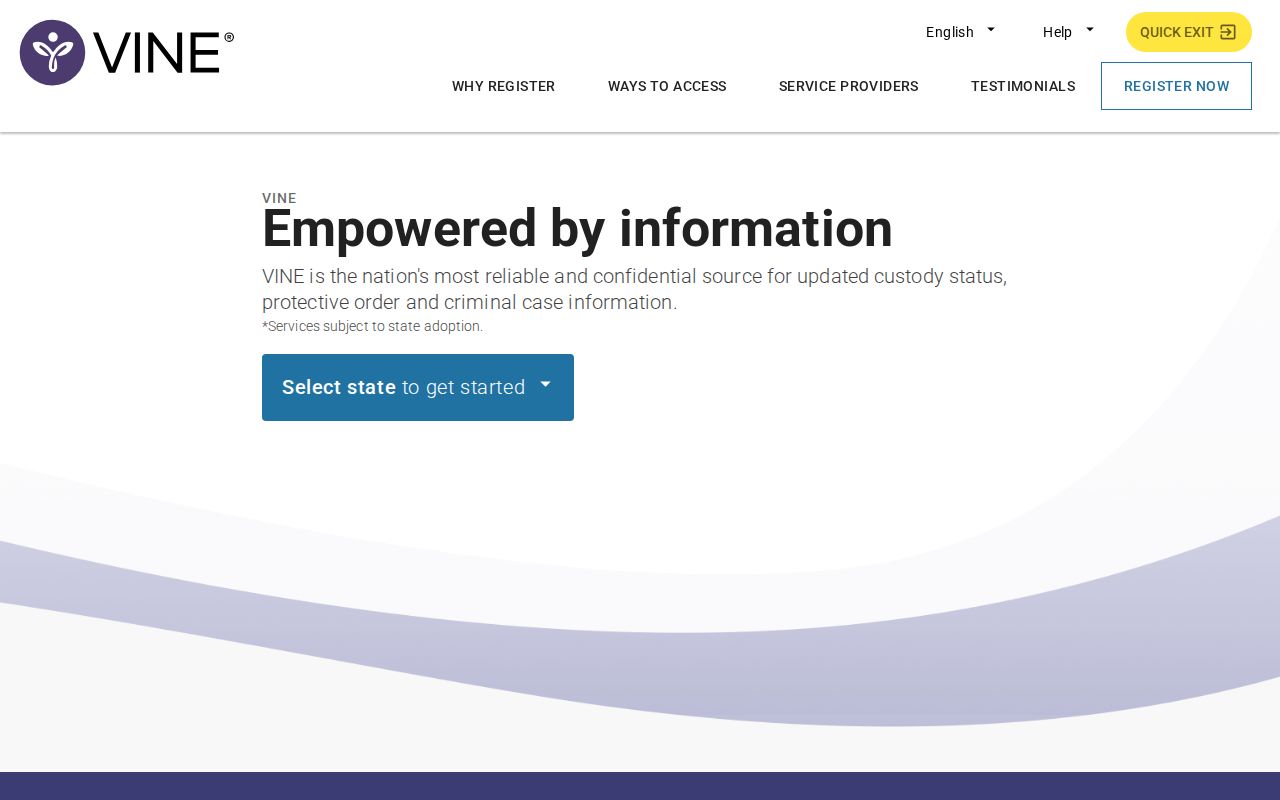
That image is historical evidence, not a current search button. Use the Attorney General’s current notification page for county registration and recheck Dallam-Hartley participation in the live interface.
Historical VINE PIN Instructions
Older Texas VINE instructions asked a registrant to select a person, add telephone or email contacts, and create a four-digit PIN for telephone notices. Entering that PIN acknowledged the call and stopped repeated calls for the same event. Unanswered calls could be retried for up to 48 hours. A historical TDCJ publication also said legacy records could remain in VINE for 90 days after release.
Those details explain an old registration, archived guide, or prior alert. They do not establish how Texas IVSS-Counties works in 2026. Do not create a PIN unless the current portal itself requests one. Follow its live account, password, contact-confirmation, and acknowledgment steps instead.
The distinction also prevents a common records error. A legacy alert may prove that the older system reported an event at that time, but it does not serve as the permanent sheriff or TDCJ record. Request the originating agency’s document when the exact release type, destination, or discharge date matters.